
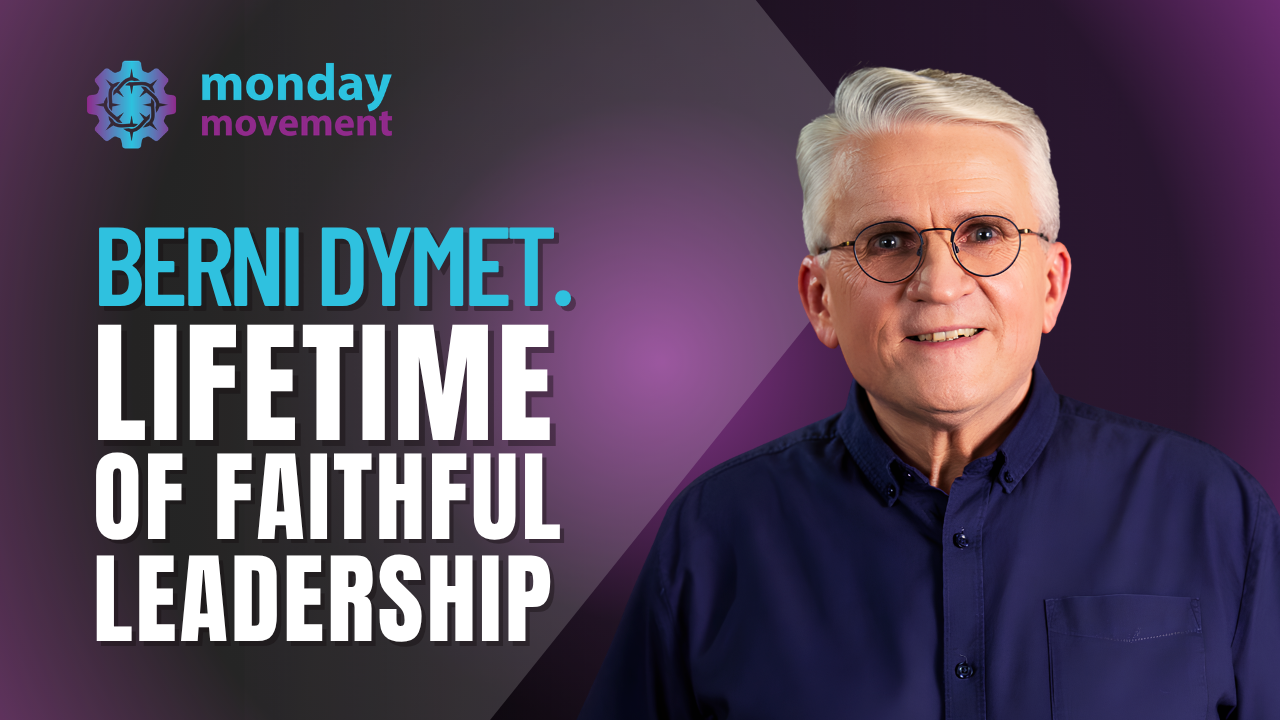
Berni Dymet, Lifetime of Faithful Leadership
It is possible to believe in Jesus, work hard, lead well, and still feel as though your faith and your everyday life are living in two separate worlds.
That is a tension many believers in the marketplace know well. Sunday can feel spiritual. Monday can feel practical, pressured, and crowded with responsibility. Church can feel like the place where faith belongs, while work, business, leadership, and public life can feel like something else entirely. This conversation with Berni Dymet pushes hard against that divide and offers something better: a more integrated, grounded, and fruitful way to follow Jesus in the real world.
In this episode of Monday Movement, Mark Bilton sits down with Berni Dymet for a rich and practical conversation about faithful leadership, ministry in the marketplace, personal transformation, spiritual disciplines, biblical hope, and the call to live as a visible witness to Christ beyond the four walls of the church. Berni speaks from a lifetime that has moved through military leadership, business, deep personal suffering, and global gospel ministry, and what comes through clearly is not polish, but depth.
About Berni Dymet
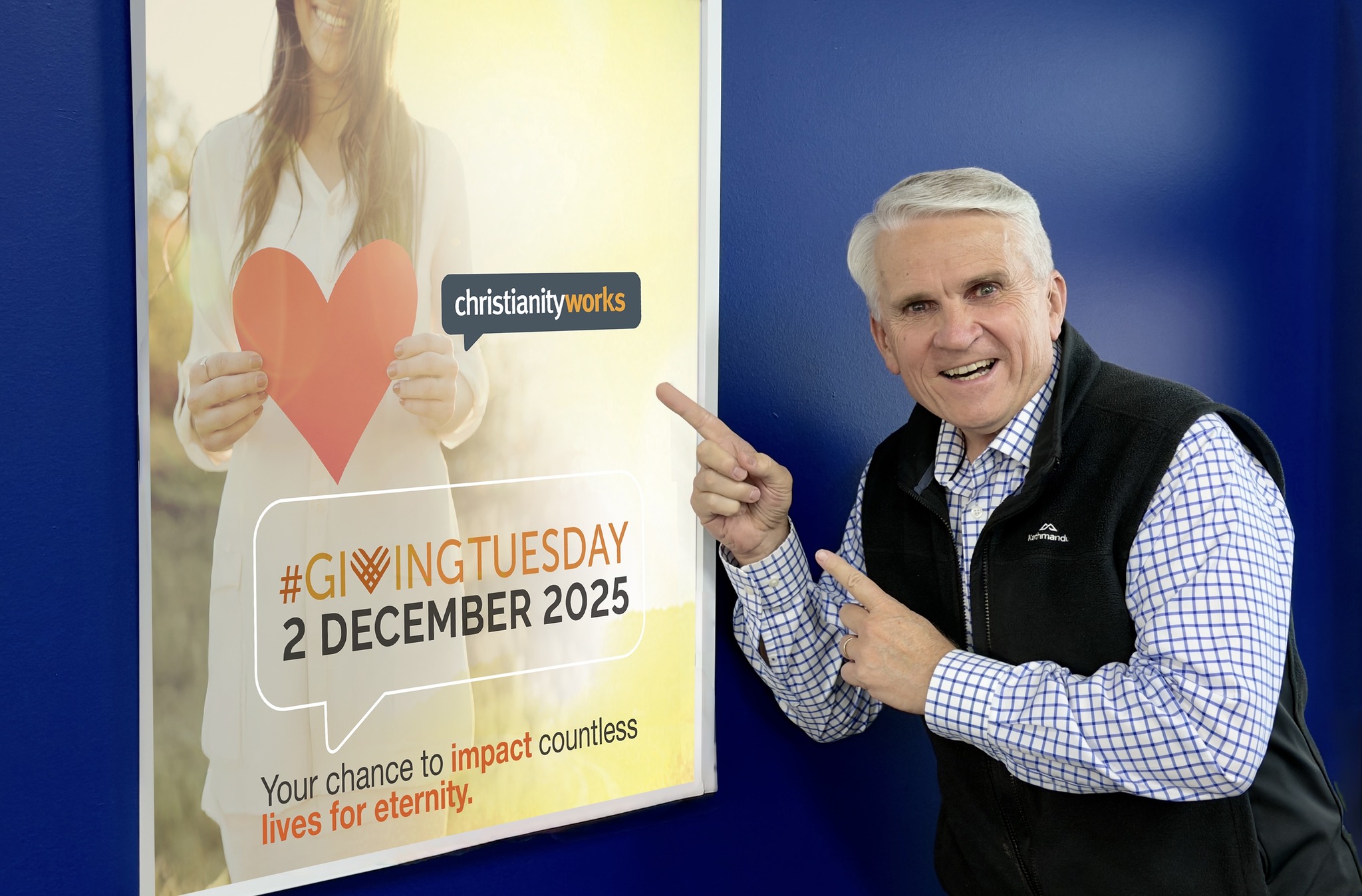
Berni is the Principal Bible Teacher at Christianityworks. He graduated from the Royal Military College Duntroon as an officer in the Australian Army, later helped build and sell an international IT consulting firm, and after significant life upheaval became one of the most influential Christian broadcasters in the world. Through Christianityworks, his Bible teaching and devotional content now reach people through radio, television, digital platforms, and print across more than 130 countries.
You can learn more about Berni here:
bernidymet.com
christianityworks.org
Watch the vodcast
If you have ever wrestled with questions like, “Does God really care about my work?”, “What does ministry look like outside the church?”, or “How do I live naturally and faithfully in the marketplace?”, this is a conversation worth sitting with. It is full of wisdom for leaders, business owners, professionals, and believers who want their Monday life to look more like their Sunday faith.
Listen to the podcast
You can also listen to the full conversation in podcast form. This episode is especially helpful if you want something practical, thoughtful, and spiritually grounded to carry into your work, leadership, and daily life.
When God does not waste anything

One of the strongest themes in this conversation is Berni’s conviction that God wastes nothing. Not military training. Not business experience. Not personal heartbreak. Not years that seemed painful, confusing, or off-course. Berni reflects on his journey through the Army, the business world, divorce, near-suicide, and eventual ministry, and he speaks about all of it not as disconnected chapters, but as material God used.
That matters because many people in the marketplace quietly assume that the useful years are the successful ones, the neat ones, or the obviously “spiritual” ones. But this episode offers a more honest and more hopeful picture. God often forms people in places they would never have chosen. What felt like detour, loss, or damage may in time become part of the very thing He uses to help others. That does not make suffering small. It does mean it is not meaningless.
Every believer is already in ministry
Berni makes this point with unusual clarity: every follower of Jesus is a minister of the gospel. Not just pastors. Not just missionaries. Not just those working in churches or Christian organisations. Every believer. That idea sits right at the heart of Monday Movement, because it challenges one of the most common blind spots in Christian thinking: the belief that “real ministry” happens somewhere else, while the rest of us are simply supporting it from a distance.
In Berni’s telling, the marketplace is not second-tier territory. It is one of the places where the gospel shines most powerfully when Christians live with integrity, hope, love, and attentiveness to God. He describes his own sense of calling as being outside the church walls, ministering in the spaces where many people may never otherwise hear the good news. He also speaks about the privilege of sitting at tables with entrepreneurs, executives, and leaders, not to force something artificial, but to be present, available, and faithful in the moment.
That is an important correction. Many Christians in the marketplace feel either pressure to turn every interaction into a formal witnessing moment, or guilt because they are not doing more obviously religious things. Berni offers a healthier vision. Live close to Jesus. Stay yielded. Walk with integrity and excellence. Be ready when the moment comes. Trust that God is more interested in reaching people than you are.
How we live is mission

There is a line running through the whole conversation: how we live our lives is mission. Berni illustrates this with stories that are both simple and searching. One takes place in an airport lounge, where a small moment of patience instead of irritation became the difference between strengthening someone’s faith and damaging it. Another unfolds in boardroom life, where a watching colleague later asked to hear about the faith she had been observing from a distance. These are not staged ministry stories. They are ordinary-life stories, and that is exactly why they matter.
The point is not that every Christian must become more intense. It is that ordinary conduct is never as ordinary as we think. The way we respond when we are tired, pressured, impatient, disappointed, or interrupted often says more than the words we plan to use. For people trying to honour God in business, leadership, law, public influence, or any everyday work, this is both sobering and freeing. Mission is not only what we say. It is also what our lives make believable.
Enjoying God changes everything

One of the most helpful sections in the episode comes when the conversation turns to spiritual disciplines. Berni is honest about the difficulty of staying connected with God, especially during demanding seasons of leadership and ministry. But he says something deeply important: all of it becomes much easier when you are enjoying God. It becomes harder when you are only labouring in your own strength.
That is insight worth slowing down for. Many Christians try to become better through effort alone. More disciplined. More obedient. More fruitful. But Berni contrasts a legalistic mindset with a relational one. He uses the analogy of marriage: faithfulness is not only about rules. It is about love. The closer we draw to Jesus, the more our hearts are changed by Him. That does not remove discipline, but it does change the source of it. Instead of constant strain, there is relationship. Instead of endless striving, there is connection.
His practical advice is refreshingly simple: spend ten unhurried minutes with Jesus and read one Bible verse a day if that is all you can do. That may sound small, but Berni insists there is more power in a single verse from the Word of God than in all the noise and commentary that often surrounds Christian life. It is difficult to argue with that. Simple faithfulness, practised consistently, often reshapes a life more deeply than dramatic bursts of intention.
Hope the marketplace can actually see

Another strong thread in this episode is hope. Berni and Mark make the distinction between ordinary modern hope, which is uncertain and wishful, and biblical hope, which is settled and certain. That is not a small difference. In a world filled with fear, division, noise, and exhaustion, Christians are meant to carry a hope that is visible, stable, and different.
This is especially important in the marketplace, where people are often surrounded by pressure, ambition, uncertainty, and bad news. Leaders who carry genuine hope stand out. Professionals who are not quietly unravelled by every wave of instability stand out. Believers who radiate joy, peace, and groundedness stand out. Not because they are pretending life is easy, but because they are drawing from a different source. That kind of life has evangelistic weight even before a single explicit gospel conversation begins.
Church should equip and send
The conversation also touches on church, community, and the role of believers in the world. Berni and Mark both speak openly about the strengths and struggles of church life, but they keep coming back to one point: church should equip and send, not simply gather and contain. If most Christians still think their main ministry is what they do for the institution rather than how they live in the world, something has gone wrong.
This does not mean local church no longer matters. Both men affirm the importance of community, encouragement, prayer, and shared life. But it does mean that the Christian imagination needs to grow. Raising children, driving a taxi, leading a company, sitting in a board meeting, serving clients, carrying public responsibility, or helping a grieving colleague are not spiritually lesser tasks. In biblical terms, they are all spaces where the life of Christ can be made visible.
Why this conversation matters
This conversation matters because it helps close a gap many believers feel every week. They love Jesus, but they are not always sure how that love should shape their working life, leadership decisions, public influence, or ordinary routines. Berni Dymet does not offer slogans. He offers something more useful: a lifetime of experience, tested faith, and simple clarity about what it means to stay connected to Jesus and live as His person in the world.
If you are in the marketplace and you want a deeper, more integrated way of following Christ, this episode is not just worth watching. It is worth reflecting on. It will encourage you to stop splitting your life in two, to recover the importance of ordinary faithfulness, and to remember that God is already at work in places that may look far more practical than spiritual.
Keep Exploring Monday Movement
Monday Movement exists to help Christians live with clarity, courage, and purpose in the marketplace. If this conversation encouraged you, you can explore more vodcasts, podcasts, and resources designed to help you connect faith with everyday work and leadership.
Visit: https://www.mondaymovement.com/
Join the Conversation
What part of Berni’s story or insight stood out to you most?
Do you find it harder to stay connected to Jesus in everyday work, or to see your ordinary life as part of your ministry?
Leave a comment below. Your reflection may encourage someone else who is trying to live with more clarity, courage, and purpose in the marketplace.
