
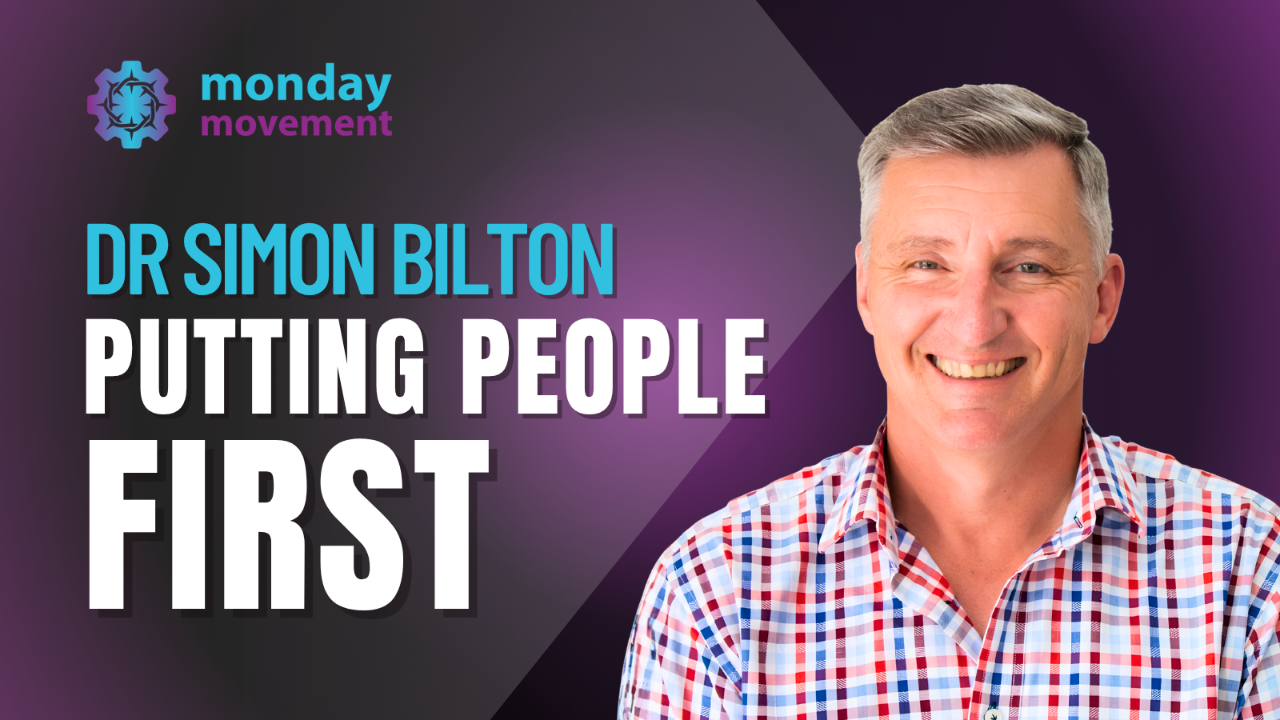
Dr Simon Bilton, Putting People First
It is easy to say people matter. It is harder to lead in a way that proves it.
Most workplaces talk about values, culture, and service. But pressure has a way of exposing what really drives us. When targets rise, mistakes happen, and change starts to cost people something, leaders usually fall back on what they truly believe about people. That is one reason this conversation with Dr Simon Bilton is so relevant. It is not only about leadership theory. It is about the deeper question underneath it: what does faith actually change in the way we lead, serve, and work?
In this episode of Monday Movement, Mark Bilton sits down with Dr Simon Bilton for a thoughtful and practical conversation about people-first leadership, faith in the marketplace, integrity, customer loyalty, accountability, and the false divide many Christians still carry between what is “spiritual” and what is “just work.”
About Dr Simon Bilton

Dr Simon Bilton is Programme Director for TMIT and Unitec, with more than 30 years of senior leadership experience across multiple sectors. His work has included leadership in banking, healthcare, fitness, justice, and vocational education. Across those settings, one thread has remained consistent: leadership is about people, and faith should shape the whole of life, not just a part of it.
You can connect with Dr Simon Bilton on LinkedIn here:
https://www.linkedin.com/in/dr-simon-bilton
Watch the vodcast
This conversation is especially valuable for leaders, business owners, professionals, and Christians in the marketplace who want to honour God in real-world work, not only in obviously “ministry” settings.
Listen to the podcast
If audio works better for you, you can also listen to the full episode below.
Putting people first is more demanding than it sounds
One of the strongest ideas in this conversation is that leadership is not mainly about systems, plans, or even outcomes. It is about people. That sounds simple, but it becomes demanding very quickly. People are complex. They make mistakes. They disappoint us. They resist change. They carry fear, pride, pressure, and hidden burdens into the workplace. Leading well means learning how to hold standards without dehumanising the people you lead.
Simon brings this to life in a striking story from his banking years. A staff member made a mistake that cost the bank twenty thousand dollars. His manager wanted the person fired. Simon refused. His view was simple: the organisation had just spent twenty thousand dollars teaching that person a lesson they would never forget. Instead of wasting that investment, he chose to lead through trust, learning, and growth.
That does not mean every mistake should be excused. It means mature leadership asks a better question than, “Who do we blame?” It asks, “What will grow people, build trust, and create a healthier culture from here?” That is a much more demanding way to lead, but it is often a more fruitful one.
The sacred-secular divide still does real damage
Another major theme in this episode is the sacred-secular divide. Many Christians would never say it out loud, but they still live as though church is where God is most interested, while work is where they simply have to survive. That mindset leaves people disconnected. Faith becomes private. Work becomes functional. Leadership becomes technical. And over time, people stop expecting God to shape what happens from Monday to Friday.
Simon and Mark push back on that strongly. If God is present in all of life, then He is present in work too. He is not only interested in what happens in church services, prayer meetings, or formal ministry. He is present in customer service, management decisions, conflict, team culture, honest conversations, and everyday responsibility.
That is what makes Simon’s line so helpful. He does not see his work as ministry. He sees his life as ministry. That is more than a good quote. It is a practical correction. It reminds us that witness is not something we turn on in special moments. It is carried through the whole of life, including the way we work, respond, serve, and lead. Integrity is easiest to admire and hardest to practise
The episode also offers a grounded view of integrity. It is easy to talk about Christian values in theory. It is harder to practise them when honesty costs something, when accountability is uncomfortable, or when workplace culture rewards image over truth.
Simon is especially honest about this in relation to Christian environments. He points out that some Christian cultures avoid confronting problems directly. Instead of having mature conversations, people bury issues, avoid accountability, and let passive-aggressive behaviour grow. That is not a small observation. It matters because real integrity is not measured by how spiritual we sound. It is measured by whether we are willing to deal truthfully, humbly, and clearly with the people around us.
This is one of the reasons the conversation feels so relevant. It does not flatter the audience. It gives useful insight. Faith at work is not just about being nice, visible, or admired. It is about becoming the kind of person whose conduct, honesty, and steadiness make faith credible in the real world.
You do not need to force witness
There is also a wise and reassuring thread running through the episode about workplace witness. Simon does not describe faith at work as a performance. He is not talking about forcing spiritual conversations or bringing a heavy-handed agenda into every room. His view is calmer and, in many ways, more demanding. Live with integrity. Serve people well. Be the same person at work that you are everywhere else. Then, when questions come, answer honestly.
That is a helpful word for many Christians in the marketplace. Some feel pressure to say more than wisdom requires. Others say nothing because they assume faith must stay private. This conversation offers a better way. Let faith become visible in the quality of your work, the way you treat people, the way you handle tension, and the way you carry responsibility. That kind of witness is harder to fake and easier for others to trust.
Why this conversation matters
This episode matters because it helps close a gap many people feel but struggle to explain. They believe God matters. They believe faith matters. But they are not always sure how that connects to targets, teams, customers, performance, mistakes, pressure, and leadership.
Mark and Simon make the case that the connection is not abstract. It is deeply practical. Faith should shape how we see people, how we lead through mistakes, how we hold accountability, how we think about our work, and how we live without separating Sunday from the rest of life.
If you are trying to honour God in the marketplace, this is the kind of conversation that can help steady your thinking. It will not give you slogans. It gives you something better: a clearer view of what faithful leadership can look like when real life is involved.
Keep Exploring Monday Movement
Monday Movement exists to help Christians live with clarity, courage, and purpose in the marketplace. If this conversation encouraged you, you can explore more vodcasts, podcasts, and resources designed to help you connect faith with everyday work and leadership.
Visit: https://www.mondaymovement.com/
Join the Conversation
What part of this conversation challenged you most?
Do you find it harder to keep faith connected to your work, or to lead people with both accountability and grace?
Leave a comment below. Your reflection may help someone else think more clearly about faith, leadership, and purpose in the marketplace.
